This Week at Ridgeline Automotive: Tire Health & Colorado’s Traction Law—Are You Ready?
This Week at Ridgeline Automotive: Tire Health & Colorado’s Traction Law—Are You Ready?
As we edge closer to winter in Colorado, tire health becomes the number-one factor in whether your vehicle grips the road—or ends up stuck on the shoulder. At Ridgeline Automotive, this week’s focus is on making sure your tires meet safety standards and comply with state winter travel requirements.
Why Tire Health Matters More in Colorado
Between steep grades, sudden storms, and rapidly dropping temperatures, Colorado roads demand more from your tires than almost anywhere else in the country.
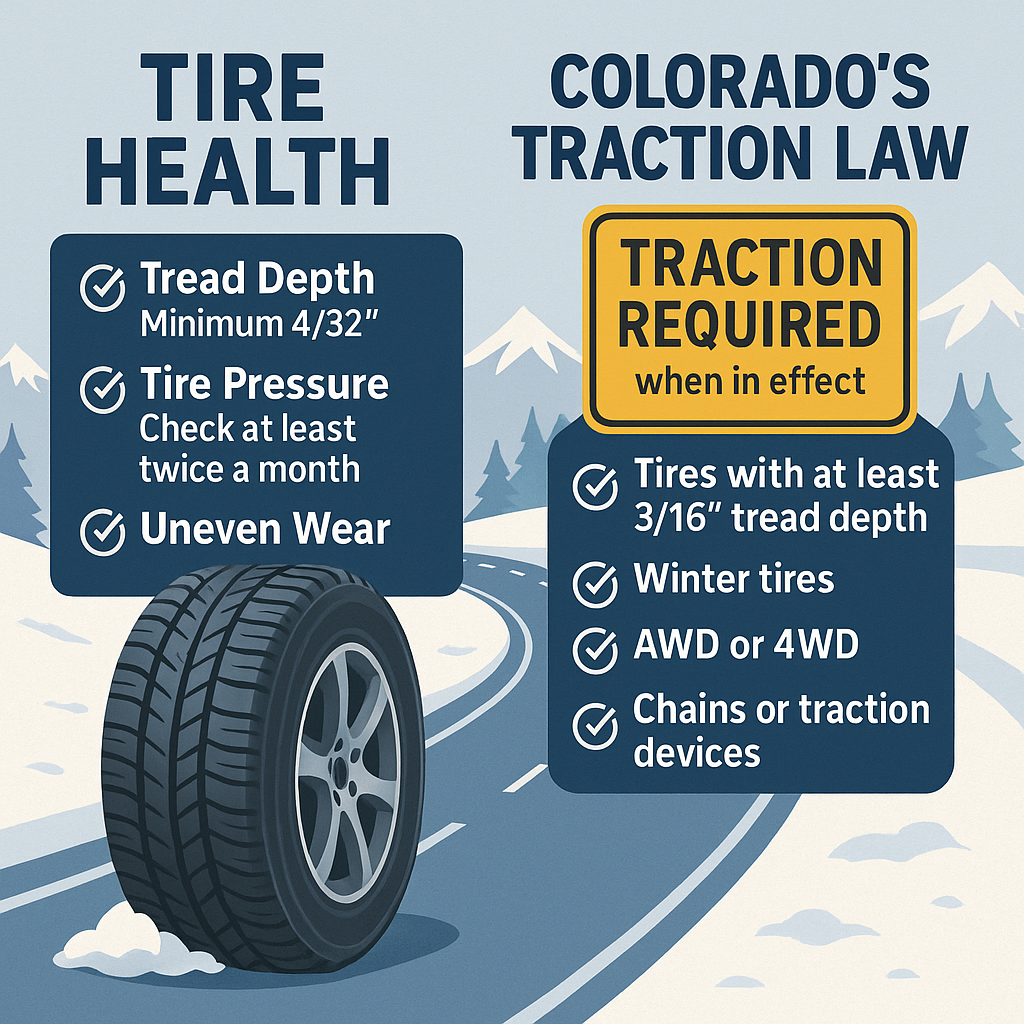
Here’s what every driver should check this week:
✔ Tread Depth
We recommend a minimum of 4/32” for winter driving, even though 3/32” is the legal minimum. More tread = better grip, shorter stopping distances, and safer braking on snow and slush.
✔ Tire Pressure
Air pressure drops 1 PSI for every 10°F decrease. Underinflated tires cause:
- Poor fuel economy
- Sloppy handling
- Increased wear
- Reduced winter traction
Check your pressure at least twice a month (and always before heading into the mountains).
✔ Uneven Wear
Cupping, feathering, and inside-edge wear often point to alignment issues or suspension problems. These become far more noticeable on icy or snow-packed roads.
Colorado’s Traction Law: What You Need to Know
From September 1 through May 31, Colorado’s Traction Law (Code 15) can be activated on the I-70 mountain corridor (between Dotsero and Morrison) any time conditions worsen.
When the Traction Law is in effect, your vehicle must have one of the following:
1. Tires with at least 3/16” tread depth
This is stricter than the general state requirement. Many all-season tires no longer meet this threshold once they’re halfway worn down.
2. Winter tires (designated by the mountain/snowflake symbol)
These stay softer in the cold and significantly improve grip.
3. All-wheel drive or 4-wheel drive with adequate tread
Even AWD vehicles must meet the tread-depth requirement.
4. Chains or approved traction devices (for 2WD vehicles)
Most drivers prefer winter tires over carrying chains unless they travel I-70 frequently.
Why This Matters for You
If your tires don’t meet the traction requirements, you can be:
- Fined
- Held liable if your inadequate traction causes a road closure
- Stuck waiting hours for assistance during storms
A quick tread-depth check at Legacy ensures you’re compliant before winter hits.
This Week’s Ridgeline Tire Services
To help Colorado drivers stay safe and compliant, we’re offering:
✅ Tire tread depth & tire health assessment
✅ Winter tire recommendations tailored to your driving area
✅ Alignment checks for uneven tire wear
✅ Discounts on winter tire installation packages